Hamad Medical Corporation, Qatar
Qatar Phototherapy (TL01) Treatment Protocol
Dermatology & Venereology Department, Hamad Medical Corporation, Qatar
Prepared by: Dr. Roudha Al-Dehneem
Updated in Jan 2026
Introduction to Qatar Comprehensive Phototherapy Protocol
This document is the unified Qatar Phototherapy Protocol. It integrates elements from American Academy of Dermatology (AAD) and international guidelines best practice.
It provides detailed, disease-specific, safe, and standardized approaches to phototherapy in Qatar. It covers NB-UVB, PUVA, UVA-1, Excimer, combination therapies, special populations, side-effect management, lifetime limits, and follow-up surveillance.
1 General Safety & Infrastructure
- Staff training: all nurses and dermatologists to undergo competency validation annually.
- Eye protection: mandatory UV-opaque goggles for all patients; staff wear goggles/visors.
- Shielding: male genitalia, female areolae, uninvolved face when possible.
- Ventilation and cooling: ensure booth temperature < 22°C; fans on before treatment.
- Documentation: every session recorded with dose, duration, erythema grade, and adverse events.
- Photos: baseline and periodic medical photography (every 3 months or at response milestone).
- Contraindications: referred to section below.
2 Dose Determination
- Preferred: MED (Minimal Erythema Dose) testing, read at 24h.
- Alternative: Fitzpatrick skin-type starting dose tables (esp. for vitiligo/children).
- Differential dosing: reduce dose to sensitive areas (face, neck, flexures); increase dose to thicker skin (palms, soles).
3 Dosage and Scheduling Guidelines
- Starting dose: based on skin type. Frequency: 2-3/week.
- Course: 18–30 sessions (max 40/course). Max: 2–3 J/cm² body, 1.5 J/cm² face.
- Decrease dose by 10 – 20% after device calibration / bulb replacement
4 Contraindications to Phototherapy
Absolute Contraindications
- Photogenodermatoses, including xeroderma pigmentosum, Cockayne syndrome, trichothiodystrophy, Bloom syndrome, and Rothmund–Thomson syndrome.
- Disorders with a genetic predisposition to skin cancers, including Gorlin syndrome and albinism.
- Concomitant use of oral immunosuppressive medications (cyclosporin, azathioprine, MMF, and tacrolimus).
- Patients who are medically unfit or unable to safely stand in a whole-body NB-UVB unit (e.g. severe cardiovascular or respiratory disease, poorly controlled epilepsy).
Relative Contraindications
- Hereditary dysplastic naevus syndrome.
- Lupus erythematosus.
- Previous exposure to arsenic or ionizing radiation.
- Previous significant use of oral immunosuppressive medications (cyclosporin, azathioprine, mycophenolate mofetil, tacrolimus).
- Current or past history of non-melanoma or melanoma skin cancer.
Special Considerations
- NB-UVB should generally be avoided in patients with a personal history of melanoma or with current melanoma or non-melanoma skin cancer. Individual risk–benefit assessment is required, and treatment may be considered when therapeutic options are limited.
- NB-UVB may be administered with caution in dermatoses that can be photoaggravated, including dermatomyositis, photoaggravated eczema, Darier disease, PRP, and active herpes simplex.
5 Phototherapy Erythema Grading and Management
| Grade Severity | Definition | Action | Topical Therapies |
|---|---|---|---|
| Grade 0 | No erythema | Progress to next increment dose | Emollients |
| Grade 1 (mild) | Barely perceptible asymptomatic erythema | Repeat previous dose | Emollients |
| Grade 2 (moderate) | Well-defined erythema, possibly causing slight manageable discomfort | Postpone one treatment session if not completely settled; if settled, repeat previous dose and thereafter reduce to 10% increments. | Topical steroids, emollients, and analgesia may help. |
| Grade 3 (severe) | Well-defined symptomatic/painful erythema | No treatment and review by doctor when possible. When erythema has completely settled, treat with 50% of previous dose, then increase by 10% increments. | Topical steroids, emollients, and analgesia may help. |
| Grade 4 (very severe) | Painful erythema usually with blistering and severe itch | No treatment and immediate review by doctor for hospital admission assessment. | Topical steroids, emollients, and analgesia may help. |
Note: On the visit, examine the patient and take a history including erythema degree, pain, or pruritis since last phototherapy session. A Face shield should be worn unless otherwise indicated, to reduce the risk of ocular toxicity.
Protocol 1 Narrowband UVB Whole Body
Indications:
- Psoriasis vulgaris
- Vitiligo
- Atopic dermatitis
- Pruritus (idiopathic, Uremic and cholestatic)
- Generalized lichen planus
- pityriasis lichenoides acuta and chronica
- Photodermatoses (Polymorphous light eruption (PMLE), erythropoietic protoporphyria, actinic prurigo, and solar urticaria)
- Perforating dermatosis
- CTCL
- Lymphomatoid papulosis
- pityriasis rubra pilaris
- Palmoplantar pustulosis
- Urticaria pigmentosa
- Cutaneous GVHD
- Generalized granuloma annulare
- Prurigo nodularis
- Localized morphea & pansclerotic morphea
| Phototherapy session | Initial dose (mJ/cm²) | UVB increase after each treatment (mJ/cm²) | Max Dose (J/cm2) |
|---|---|---|---|
| Type I | 130 | 15 | 2000 |
| Type II | 220 | 25 | 2000 |
| Type III | 260 | 40 | 3000 |
| Type IV | 330 | 45 | 3000 |
| Type V | 350 | 60 | 5000 |
| Type VI | 400 | 65 | 5000 |
NB-UVB – Psoriasis
Frequency: 2 sessions/week
Estimated number of sessions to observe a response: 30 sessions
Follow-up: every 30 sessions to assess the patient’s clinical response
- Indicated for moderate psoriasis with small superficial plaques, in children and pregnant women.
- Women of childbearing age receiving NB-UVB phototherapy should take folate supplementation.
- Obese (BMI > 30; abdominal circumference > 100) are at risk of photo-induced erythema due to the proximity to UV lamps, thus increments should be reduced to 10%.
- Concomitant topical therapy with vitamin D analogues, retinoids, and corticosteroids during NB-UVB can be used with a potential to improve efficacy.
| Days Missed | Dose Adjustment |
|---|---|
| 1 week | Hold the previous dose constant |
| 1–2 weeks | Decrease the previous dose by 25% |
| 2–4 weeks | Decrease the previous dose by 50% |
| > 4 weeks | Return to starting dose |
| Aspect | Maintenance Therapy Guidance |
|---|---|
| Indication for Maintenance | Once psoriasis has cleared, the patient may continue maintenance therapy as a taper or indefinitely according to availability slots in the units. |
| Maintenance Dose | The maintenance dose should be the last dose administered prior to disease clearance. |
| Tapering Maintenance Protocol | Treat twice weekly for 4 weeks, then once weekly for 4 weeks. Dose should be held constant throughout the taper. |
| Prolonged Maintenance Therapy | For long-term maintenance, administer treatment every 1–2 weeks. Reduce the final dose by 25% and hold constant for all maintenance treatments. |
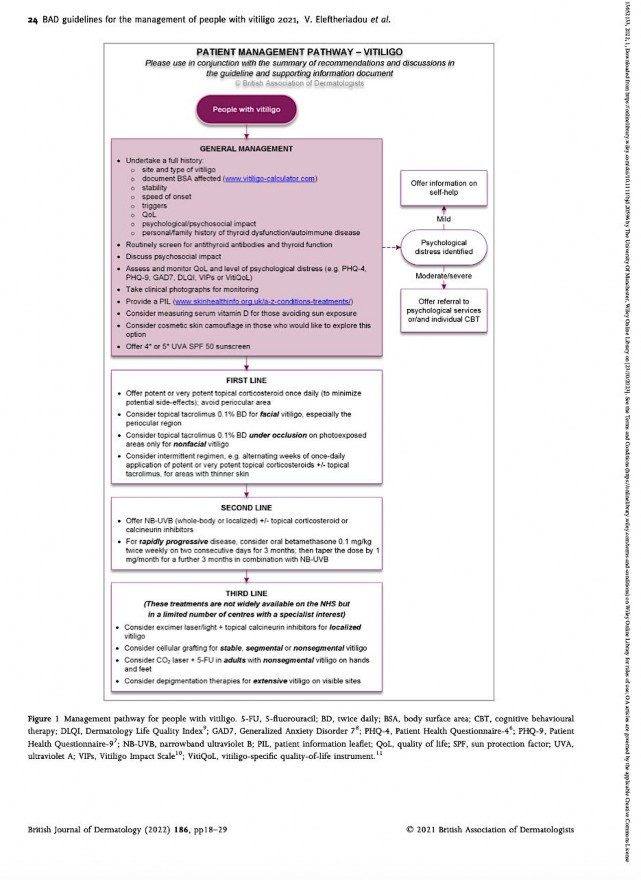
NB-UVB – Atopic Dermatitis
Frequency: 2 sessions/week
Estimated number of sessions to observe a response: 30 sessions
Follow-up: every 30 sessions to assess the patient’s clinical response
- NB-UVB is the most commonly recommended phototherapy modality due to its favorable safety profile and proven efficacy compared with UVA-based therapies.
- Phototherapy can be used as monotherapy or in combination with topical treatment. The use of phototherapy with topical calcineurin inhibitors is cautioned.
- Several studies document the safe and effective use of both UVA and UVB phototherapy in children and adolescents.
Protocol 2 Targeted NB-UVB (Excimer 308 nm) – Vitiligo
Frequency: 2 sessions/week
Estimated number of sessions to observe a response: 30 sessions
Follow-up: every 30 sessions to assess the patient’s clinical response
- Compared to NB-UVB phototherapy (311-313nm), the excimer laser appears to augment and expedite the re-pigmentation process.
- Excimer laser and lamp treatments are equally effective or even more superior compared to NB-UVB.
- Excimer lamps or laser is indicated for segmental vitiligo and stable localized non-segmental vitiligo.
| Body Area | Starting Dose (mJ/cm²) | Increment |
|---|---|---|
| Face & Neck | 100 | 5-10% (max 25 mj) |
| Trunk (excluding genital area) | 200 | 15% |
| Extremities | 300 | 15% |
Protocol 3 Hand & Foot – Localized NB-UVB
Frequency: 2 sessions/week
Estimated number of sessions to observe a response: 30 sessions
Follow-up: every 30 sessions to assess the patient’s clinical response
- Hands: Palms and backs of hands can be treated together or separately. Fingers should be spread in the center of the unit. Cuffs should also be used to protect the untreated areas.
- Feet: Can be treated at the same time as hands or separately. Feet should be in the Centre of the unit.
- Starting Dose: No MED is required. Give 0.39J cm2 as a starting dose unless otherwise decided by doctor.
Protocol 4 NB-UVB with Systemic Therapy
Phototherapy with Retinoids – Acitretin
- Recommended acitretin Dosage: 10 – 25mg/day.
- Standard phototherapy entails 2 - 3 sessions per week for a period of 12 weeks to achieve therapeutic results.
- Oral Retinoids decrease the thickness of the epidermis, enhancing UV penetration and causing a more brisk response to UV exposure.
Protocol 5 NB-UVB use in Pregnancy and Lactation
- NB-UVB phototherapy is generally considered safe during pregnancy when clinically indicated.
- High cumulative NB-UVB exposure may result in a reduction in folic acid levels due to photodegradation, particularly with prolonged full-body treatment courses.
- Folate supplementation should be considered in women of childbearing age receiving prolonged NB-UVB courses (e.g. more than 30 treatments).
Protocol 6 NB-UVB use in Children
- NB-UVB has demonstrated good efficacy, tolerability, and short-term safety in children across multiple retrospective studies.
- There is no defined minimum age for NB-UVB treatment; however, children must be able to stand alone in the phototherapy cabinet and comply with safety measures.
- NB-UVB is effective in childhood psoriasis, supported by systematic reviews and retrospective studies.
Adverse Effects of NB-UVB Phototherapy
General Safety
NB-UVB is considered a safe treatment modality with a relatively low risk of adverse effects.
Short-Term Adverse Effects
- Erythema. Referred for erythema grading below.
- Burning: Redness, tenderness, pain, tightness, itching, rarely Blistering (seen 4–6 h after treatment).
- NB-UVB may exacerbate lupus erythematosus; autoantibody screening should be considered in at-risk individuals.
Delayed Adverse Effects
- Photoageing.
- Tanning (skin darkening).
- Current evidence does not demonstrate a significant increased risk of skin cancer with NB-UVB compared with PUVA.
Protocol 7 UVA-1 Treatment
- UVA1 phototherapy (340–400 nm) offers several theoretical advantages over PUVA, including deeper dermal penetration, a broader induction of T-cell apoptosis, and avoidance of psoralen-related adverse effects.
- Phototherapy consists of three phases: induction, consolidation, and maintenance.
- UVA1 therapy has been reported to be beneficial in several dermatoses, particularly sclerosing dermatoses, acute and chronic sclerodermoid GVHD, urticaria pigmentosa and mycosis fungoides.
| Skin type | Initial dose (J/cm²) | Increase (J/cm²) | Maximum dose (J/cm²) |
|---|---|---|---|
| 1 | 10.00 | 10.00 | 30.00 |
| 2 | 10.00 | 10.00 | 30.00 |
| 3 | 10.00 | 10.00 | 30.00 |
| 4 | 10.00 | 10.00 | 30.00 |
| 5 | 10.00 | 10.00 | 30.00 |
| 6 | 10.00 | 10.00 | 30.00 |
Protocol 7 UVA-1 Treatment
UVA1 phototherapy (340–400 nm) offers several theoretical advantages over PUVA, including deeper dermal penetration, a broader induction of T-cell apoptosis, and avoidance of psoralen-related adverse effects.
Phototherapy consists of three phases: induction, consolidation, and maintenance.
Note: The consolidation phase refers to the period after clinical clearance during which UV dose and treatment frequency are held constant. A minimum of 1 month of continued clearance is required to document complete response.
In clinical practice, patients should be reassessed 1–3 months after clearance before stopping treatment or transitioning to maintenance, as continued therapy may help consolidate and prolong remission.
Indications for UVA-1 Therapy
- Sclerosing dermatoses
- Acute and chronic sclerodermoid GVHD
- Urticaria pigmentosa
- Mycosis fungoides
- Atopic dermatitis (severe cases)
- Localized scleroderma
- Lupus erythematosus (selected cases)
UVA-1 Dosage Ranges
- Low-dose UVA-1: 10-20 J/cm²
- Medium-dose UVA-1: >20-70 J/cm²
- High-dose UVA-1: >70-130 J/cm²
Important: The dosage and increment will follow the available UVA1 machine in Department of Dermatology in Rumailah Hospital Qatar with Max energy 30 J/cm².
UVA1 (UVA) Phototherapy Recommended Dosing Regimen
| Skin type | Initial dose (J/cm²) | Increase (J/cm²) | Maximum dose (J/cm²) |
|---|---|---|---|
| 1 | 10.00 | 10.00 | 30.00 |
| 2 | 10.00 | 10.00 | 30.00 |
| 3 | 10.00 | 10.00 | 30.00 |
| 4 | 10.00 | 10.00 | 30.00 |
| 5 | 10.00 | 10.00 | 30.00 |
| 6 | 10.00 | 10.00 | 30.00 |
Dose Adjustment Following Missed / Cancelled Treatments
| Treatment interval (days) | Dose adjustment |
|---|---|
| 1 – 7 | Hold dose or increase dose as per protocol. |
| 8 – 14 | Decrease dose by 25% of previous dose. |
| 15 – 21 | Decrease dose by 50% of previous dose. |
| 22 – 28 | Decrease dose by 75% of previous dose. |
| More than 28 | Refer back to doctor to restart treatment |
Dose Adjustment in Case of Erythema (UVA1)
| Severity | Adverse effect | Dose adjustment |
|---|---|---|
| Mild | Barely perceptible erythema resolving within 24 hours and/or mild itch (starting or persisting more than 2 hours after treatment, not sufficient to disturb sleep and resolved within 24 hours). | Give the same dose, then increase by 5 J/cm². |
| Moderate | Well-defined, asymptomatic erythema or erythema causing slight manageable discomfort and/or moderate itch (starting or persisting more than 2 hours after treatment and sufficient to disturb sleep). | Postpone one treatment if not completely settled. If settled, repeat the previous dose and thereafter increase by 5 J/cm². |
| Severe | Symptomatic painful well-defined erythema or bullae/blisters and/or severe itch (starting or persisting more than 2 hours after treatment, disturbing sleep and daily activities; intolerable, pricking, burning, or pins-and-needles quality). | Stop phototherapy until complete recovery. Review by doctor. When settled, restart at 15 J/cm² or perform phototesting if erythema occurred at low doses to exclude UVA1 photosensitivity. |
Protocol 8 PUVA Treatment
The term PUVA refers to the use of photosensitizing agents "psoralens" to sensitize target cells to the effects of UVA light for the treatment of skin conditions.
Psoralen Types:
- In the United States: 8-MOP is the only commercially available oral psoralen
- In Europe: 5-methoxypsoralen is used because of its lower tendency to cause phototoxicity
- Trimethylpsoralen (TMP) is often utilized for bath PUVA
Important Note: In advanced stages of Mycosis Fungoides (IIB–IVB), PUVA is not sufficient as monotherapy, and combinations PUVA plus systemic retinoids (e.g. bexarotene) or IFN-α-2a has been observed to prolong remission.
Topical PUVA
Topical PUVA is best suited for the treatment of localized psoriasis and is recommended in particular for palmoplantar disease.
Application: 8-MOP (0.1%–0.01%) in creams, ointments, or lotions, followed by UVA irradiation.
Options for Administering Topical PUVA:
- Option 1: 0.1% 8-MOP solution compounded with an emollient and applied 20 minutes before UVA exposure.
- Option 2: 1 mL of 1% 8-MOP solution mixed with 2 L of water and soaked into hands and feet for 15 min then wait for 30 minutes before UVA exposure.
Treatment Frequency: PUVA sessions are administered 2-3 times per week.
Important Guidelines:
- Dose increments should be performed no more frequently than twice weekly, with a minimum interval of 72 hours between increments.
- Dose escalation should not be undertaken during the first week of treatment when the initial dose is based on the minimal phototoxic dose (MPD), to avoid accumulation of delayed cutaneous phototoxicity.
Topical PUVA Formulations and Starting Doses:
| Formulation Type | Concentration / Preparation | Starting Dose | Notes |
|---|---|---|---|
| Topical Soaks (Hands) | 0.75 ml 8-MOP 1.2% solution in 3 litres of water | 0.3 J/cm² | No MPD usually required |
| Topical Soaks (Feet) | 0.75 ml 8-MOP 1.2% solution in 3 litres of water | 0.3 J/cm² | No MPD usually required |
| Topical Soaks (Legs) | 9 ml of 8-MOP 1.2% solution in 45 litres of water | 0.3 J/cm² | UVA treatment given immediately after soak |
| Hands Feet Legs Gel | 0.005% 8-Methoxypsoralen solution in aqueous gel | 0.1 J/cm² | Apply thin layer, avoid unaffected areas |
| Paint | 0.15% 8-methoxypsoralen solution in solvent base | 0.1 J/cm² | Avoid delicate areas (eyelids, genitalia) |
Clinical Note: In a meta-analysis of 7 studies looking at the efficacy of topical PUVA, 77% of subjects achieved PASI 75 compared with 61% for targeted UVB phototherapy.
Increment Regimen Based on Erythema Response (Topical PUVA)
| Erythema grade | Clinical description | Dose increment / action |
|---|---|---|
| No erythema | No erythema following treatment. | Increase dose by 20% of the previous dose. If attending once weekly, increase by 10%. |
| Grade One (mild) | Barely perceptible erythema resolving within 72 hours. | Repeat the previous dose, then increase by 10%. |
| Grade Two (moderate) | Well-defined erythema causing mild but manageable discomfort. | Postpone one treatment if required, then repeat the previous dose and thereafter reduce increments to 10%. |
| Grade Three (severe) | Well-defined symptomatic or painful erythema. | No treatment and review by doctor. When fully settled, restart at 50% of the previous dose, then increase by 10%. Report contributory factors to Photonet for inclusion in the national risk register. |
| Grade Four (very severe) | Painful erythema usually associated with bullae. | No treatment and urgent review by doctor. |
Special Considerations:
- In patients with pigmented skin, erythema and edema may not be seen, but the patient may complain of heat and skin tightness.
- If patient develops itch, encourage use of prescribed topical steroid and emollients. If persistent, review by doctor.
- PUVA pain - no treatment and review by doctor.
- If patient cancels/misses treatment – See missed treatment protocol.
- Discharge - See discharge protocol.
Oral PUVA
Timing of Administration:
- Oxsoralen-Ultra should be taken 1 - 1.5 hours before exposure to UVA
- 8-methoxypsoralen (8-MOP) 2 hours before UVA exposure to achieve optimal photosensitization
The psoralen dose is determined based on the patient's body weight.
Note: Despite strong efficacy data, oral PUVA is used less frequently due to the widespread availability of narrowband UVB and its more favorable safety profile.
Dosing of 8-Methoxypsoralen for Oral Psoralen Plus Ultraviolet A (PUVA)
| Patient weight (lb) | Patient weight (kg) | Drug dose (mg) |
|---|---|---|
| < 66 | < 30 | 10 |
| 66–143 | 30–65 | 20 |
| 144–200 | 66–91 | 30 |
| > 200 | > 91 | 40 |
Dosing of Ultraviolet A Radiation for Oral Psoralen Plus Ultraviolet A (PUVA)
| Skin type | Initial dose (J/cm²) | Increments (J/cm²) | Maximum dose (J/cm²) |
|---|---|---|---|
| I | 0.5 | 0.5 | 8 |
| II | 1.0 | 0.5 | 8 |
| III | 1.5 | 1.0 | 12 |
| IV | 2.0 | 1.0 | 12 |
| V | 2.5 | 1.5 | 20 |
| VI | 3.0 | 1.5 | 20 |
Maintenance Phase Treatment of Mycosis Fungoides with Ultraviolet Light (based on twice weekly for psoralen plus UVA phototherapy)
| Treatment frequency | PUVA Weeks | PUVA (Dose relative to end consolidation) |
|---|---|---|
| Twice weekly | 4–8 | Same |
| Weekly | 4–8 | Same |
| Every 10 days | 4–8 | Same |
| Every 2 weeks* | 4–8 | Same |
| Every 3 weeks | 4–8 | Same |
| Every 4 weeks | 4–8 | Same |
Safety Precautions for Oral PUVA:
- Protective glasses to be worn from the time of taking the tablets for the rest of the daylight hours that day.
- Common photosensitizing medications include thiazide diuretics, tetracycline antibiotics, and several other widely prescribed drugs.
Contraindications and Cautions:
- Contraindicated in: Children younger than 10 years, pregnant or breastfeeding patients, and individuals with a history of melanoma, lupus erythematosus, or xeroderma pigmentosum.
- Use with caution in: Patients aged 10–18 years and in those with a history of dysplastic nevi, nonmelanoma skin cancer, photosensitivity disorders, prior exposure to carcinogenic agents, or use of immunosuppressive medications (e.g., methotrexate, cyclosporine).
- Also use caution in: Patients taking photosensitizing medications, as most drug-induced phototoxic reactions occur in the UVA range.
Adverse Effects of PUVA Phototherapy
Acute Adverse Effects:
- Gastrointestinal symptoms (nausea with oral PUVA)
- Erythema and phototoxic reactions (redness, tenderness, blistering)
- Pruritus and xerosis
- Fatigue, headache, photosensitivity
- Nail changes, transient pigmentary changes, tanning
Chronic Adverse Effects:
- Photoaging and pigmentary changes (lentigines, wrinkling, skin fragility)
- Cataract risk (prevented with proper eye protection)
- Increased risk of nonmelanoma skin cancer, especially squamous cell carcinoma with high cumulative exposure
- Association with melanoma remains controversial
Important Risk Information:
- Acute and subacute adverse effects of oral PUVA include phototoxic reactions, nausea, pruritus, photo-onycholysis, and melanonychia.
- Long-term adverse effects include lentigines and photocarcinogenesis, primarily squamous cell carcinoma.
- The risk of basal cell carcinoma is not significantly increased, even with high cumulative PUVA exposure.
- The risk of squamous cell carcinoma increases mainly in patients who have received more than 350 PUVA treatments; patients receiving fewer than 150 treatments have only a mild increase in risk.
- Nonmelanoma skin cancer risk associated with oral PUVA is primarily seen in white and fair-skinned individuals, with no increased risk observed in patients with skin of color.
- The risk of melanoma with oral PUVA remains uncertain, with increased incidence reported in American studies but not confirmed in European studies.
Protocol 9 Post-PUVA Phototherapy Skin Care
Post-PUVA Skin Care Guidelines:
- Avoid exposure to sunlight for at least 24 hours after PUVA and use a broad-spectrum sunscreen (SPF ≥15).
- Moisturize the skin twice daily and apply moisturizer frequently between treatments.
- Avoid scrubbing the skin harshly or peeling/tearing off dry or scaling skin.
- Limit the use of nail polish and makeup on areas receiving treatment.
- Avoid applying perfumes or colognes directly to the skin.
- Avoid sunbathing during the clearing stage of PUVA treatment.
Additional Recommendations: Patients should be educated about proper skin care following PUVA treatment to minimize adverse effects and maximize therapeutic benefits. Emphasize the importance of consistent sun protection and moisturization.
Protocol 10 Monitoring and Skin Surveillance of Patients Undergoing PUVA/UVA
Baseline Monitoring
- Full body skin examination before initiation of therapy.
- Eye examination to rule out cataracts prior to starting PUVA.
- Assessment of skin type and baseline pigmentation.
- Documentation of existing skin lesions, moles, and sun damage.
Ongoing Monitoring and Skin Surveillance
- Regular full skin examinations every 3–6 months to assess for photoaging, pigmentary changes, and cutaneous malignancies.
- Documentation of any new or changing lesions.
- Assessment of treatment response and adjustment of therapy as needed.
- Monitoring for signs of phototoxicity or adverse reactions.
Long-term Surveillance Recommendations
- For patients receiving high cumulative doses of PUVA (>150 treatments), consider more frequent skin examinations (every 3 months).
- Educate patients on self-skin examination and reporting of any new or changing lesions.
- Consider baseline and periodic photography for documentation of treatment response and surveillance.
- Coordinate with primary care providers for comprehensive health monitoring.
Protocol 11 Management of Minor Adverse Events
Severe burns – see protocol below for management of burn.
Common Minor Adverse Events and Management:
1. Transient Erythema
- Description: Common; starts a few minutes after treatment and persists for up to 8 hours. It clears completely.
- Management: Next erythemal assessment prior to the next dose of UVB should not be affected i.e. E0+ reaction.
2. Itch
- Description: Usually during first 2 weeks of treatment.
- Management: Emollients and antihistamines.
3. Cold Sores (Herpes Labialis)
- Description: Reactivation of herpes simplex virus in susceptible individuals.
- Prevention: Susceptibility to this should be prevented with lip sunscreen.
- Treatment: Treat with topical or oral acyclovir.
4. Blistering
- Description: Occurs at the margins of psoriasis plaques, especially on plaques around the mid and lower abdomen and buttocks.
- Management: Manage with topical steroid.
5. Dryness and Xerosis
- Description: Common side effect of phototherapy.
- Management: Regular use of emollients and moisturizers.
General Management Principles: Most minor adverse events can be managed with symptomatic treatment and dose adjustment. Always document adverse events and response to management in the patient's record.
Protocol 12 Accidental Overdose Management
Management Guidelines Based on Severity:
Mild Overdose
- Presentation: Mild erythema, minimal discomfort
- Management: Manage with emollients and reassurance; cool compresses if needed.
Moderate Overdose
- Presentation: Significant erythema, discomfort, possible edema
- Management: Add topical corticosteroids and oral antihistamines; withhold phototherapy until erythema resolves, then resume at a reduced dose.
Severe Overdose
- Presentation: Severe erythema, pain, blistering
- Management: Treat as a phototoxic burn; consider oral corticosteroids (prednisolone 30–40 mg daily for 5 days). Admit if exposure exceeds >2–3× MED, or if there is severe pain or blistering.
Documentation and Reporting:
- Document the incident thoroughly in the patient's medical record.
- Inform the patient about what happened and provide aftercare advice.
- Follow institutional incident-reporting policies.
- Review the incident to prevent recurrence (equipment check, protocol review, staff training).
Preventive Measures:
- Regular calibration of phototherapy equipment.
- Double-check dose calculations before treatment.
- Proper staff training on equipment operation.
- Clear documentation of treatment parameters.
- Regular maintenance and bulb replacement schedules.
Protocol 13 Lifetime Limits of UVL Exposure
Recommended Lifetime Limits:
- NB-UVB: Maximum 500 sessions (extendable to 800 with special approval and close monitoring).
- PUVA: 200–250 sessions lifetime maximum.
- UVA-1: >250 sessions requires annual skin cancer checks and careful monitoring.
Documentation Requirements:
- Maintain cumulative treatment log for all patients.
- Record total number of sessions for each phototherapy modality.
- Document cumulative UV dose when possible.
- Flag patients approaching lifetime limits in the electronic medical record.
- Regular review of cumulative exposure during treatment planning.
Special Considerations:
- Patients with skin types I-II may reach lifetime limits sooner than those with darker skin types.
- Consider individual risk factors (personal or family history of skin cancer, immunosuppression).
- Regular skin cancer surveillance for patients with high cumulative exposure.
- Alternative treatment options should be considered as patients approach lifetime limits.
| Phototherapy Type | Recommended Maximum Sessions | Extended Maximum (with approval) | Monitoring Requirements |
|---|---|---|---|
| NB-UVB | 500 sessions | 800 sessions | Annual skin exams after 300 sessions |
| PUVA | 200-250 sessions | Not recommended | Skin exams every 6 months after 150 sessions |
| UVA-1 | No established limit | N/A | Annual checks after 250 sessions |
| Excimer (308nm) | No established limit | N/A | Regular monitoring based on treated area |
Protocol 14 Management of Burn
Understanding "Initiation Burn"
"Initiation burn" is a phenomenon in which the patient unexpectedly experiences burn very early in the course of phototherapy at a very low dose. This is especially common in patients with atopic dermatitis.
Despite initial sensitivity, patients are often able to tolerate ultraviolet light if dosimetry is adjusted and titrated carefully.
Step-by-Step Management Protocol:
- Immediate Management: Cool down the skin with topical corticosteroids such as triamcinolone, 0.1% ointment, until the redness and burning/tingling sensation completely subside.
- Treatment Restart: Phototherapy is reinitiated at a very low dose.
- Gradual Increments: If treatments are tolerated at a very low dose, very small incremental increases can be attempted.
- Supportive Care: Patients are advised to use emollients multiple times daily and should be continued throughout the course of phototherapy treatment.
- Vigilance: The clinician should be vigilant for any signs and symptoms of burning.
- Symptom Management: If such issues arise, symptomatic treatment should be provided and the UV dose should be kept stable or lowered accordingly until the symptoms completely resolve, then phototherapy treatment initiated.
- Photohardening: Eventually, through photohardening, many of these patients adapt to light and overcome initiation burn.
Suggested Dosing Protocol for a Patient with Initiation Burn
| Type of UV | Initial dose (mJ/cm²) | Subsequent dose increments (mJ/cm²) | Notes |
|---|---|---|---|
| Narrowband UV-B | 30 | 10–30 | Very slow titration |
| Broadband UV-B | 5 | 5–10 | Extremely cautious increases |
| Psoralen + UV-A | 0.25 | 0.5 | Minimal increments only |
Important Protocol Notes:
- Maintain the tolerable initial dose for approximately 2 to 5 treatments before attempting subsequent dose increments to allow time for photohardening.
- The subsequent dose should only be increased if there is no erythema or symptoms of burning after the previous treatment session.
- Consider longer intervals between treatments (e.g., twice weekly instead of three times weekly) for patients with initiation burn.
- Document any burning reactions and the management approach in the patient's record.
Patient Education Points:
- Explain the concept of photohardening to patients.
- Emphasize the importance of reporting any burning sensation immediately.
- Instruct on proper use of emollients and cooling measures.
- Provide realistic expectations about the need for slower dose escalation.
- Reassure patients that many can successfully complete treatment despite initial sensitivity.
Protocol 15 Discharge Protocol from Phototherapy
Treatment usually continues until:
- The patient is clear of the condition
- Condition is no longer improving
- Has 4 treatments at MRA (minimal residual activity)
- Is stopped on medical advice
A phototherapy summary is sent to the referring clinician on completion of treatment.
Follow-up Care Guide:
- Patients completing treatment having incurred no problems – discharge to referring clinician with summary report and recommendations for ongoing care.
- Patients who have failed to attend 2 phototherapy sessions without informing the attending nurse – discharge to referring clinician. If patient has had mitigating circumstances, consider discussing with referring clinician before discharge.
- Patients who are known to flare quickly when treatment is completed should be advised to contact the referring clinician if they develop a flare up or have concerns. Consider providing a contingency plan.
- Patients attending for desensitisation who may require repeated treatment should be reviewed early the following year by the phototherapy clinic as appropriate. Schedule follow-up appointment before discharge.
Discharge Documentation Requirements:
- Complete phototherapy summary including total sessions, final dose, treatment response, and any adverse events.
- Provide recommendations for ongoing skin care and sun protection.
- Document instructions for follow-up with referring clinician.
- Record cumulative UV exposure for future reference.
- Provide patient with written discharge instructions and contact information.
Patient Education at Discharge:
- Review signs of disease recurrence and when to seek medical attention.
- Emphasize importance of sun protection and skin cancer surveillance.
- Provide guidance on ongoing skin care regimen.
- Discuss when to consider retreatment if needed.
- Ensure patient understands follow-up arrangements.
References
Qatar Phototherapy Protocol • Dermatology & Venereology Department, Hamad Medical Corporation, Qatar
Prepared by: Dr. Roudha Al-Dehneem • Phototherapy Committee • Updated in January 2026
This document applies to all Dermatology Phototherapy Units under Hamad Medical Corporation (HMC), Qatar.